Airport wind cones need to move freely, remain visible and show wind direction without being obstructed by worn fabric, binding hardware or vegetation. Use this checklist to document routine inspections and decide when fabric, frame hardware or lighting needs service.
This checklist summarizes FAA maintenance and wind-cone guidance. It does not replace the airport's approved maintenance program, the wind-cone manufacturer's instructions, electrical safety procedures or requirements that apply to a specific federally funded or certificated airport.[1][2][3]
Download the Two-Page Airport Windsock Field Checklist (PDF)
Wind Cone Record
| Field |
Record |
| Airport or facility |
|
| Runway or location |
|
| Wind cone ID |
|
| Primary or supplemental |
|
| L-806 or L-807, if known |
|
| Lighted or unlighted |
|
| Windsock size |
|
| Inspector |
|
| Inspection date |
|
| Work order |
|
Inspection Schedule
Daily — Lighted Wind Cones
FAA maintenance guidance calls for daily operating checks on lighted wind cones.[1]
-
☐ Confirm all wind-cone lights operate at night.[1]
-
☐ Look for dim, intermittent or failed lamps.[1]
-
☐ If a photocell is installed, confirm that it switches the lights on.[1]
-
☐ Record the defect and follow the manufacturer's electrical troubleshooting procedure.
Monthly — Fabric, Motion and Vegetation
FAA guidance calls for monthly checks of frame movement, fabric condition and vegetation.[1]
-
☐ Confirm the cone assembly can rotate freely through 360 degrees.[1]
-
☐ Watch for binding, hesitation, uneven movement or contact with the structure.
-
☐ Examine the full fabric body, seams, throat and attachment points.[1][2]
-
☐ Look for wear, rot, heavy soiling, fading, tears, loose stitching and abrasion.
-
☐ Confirm the throat remains fully supported and open.
-
☐ Confirm water can drain from the frame and basket area.
-
☐ Remove or schedule removal of vegetation that restricts motion or visibility.[1]
-
☐ Confirm pilots have an unobstructed view of the wind cone from the intended approach and takeoff paths.[3]
Every Two Months — Non-LED Lighting
FAA guidance addresses group lamp replacement based on rated life and cleaning globes when lamps are replaced. LED assemblies are excluded from the lamp-age provision.[1]
-
☐ Review lamp age against the manufacturer's rated life.[1]
-
☐ Replace lamps as a group when required by the maintenance program.
-
☐ Clean globes during lamp replacement.[1]
-
☐ For LED lighting, follow the lighting manufacturer's inspection instructions.
Semiannual — Bearings and Electrical Condition
-
☐ Check bearings for free movement and signs of contamination.[1]
-
☐ Lubricate only as directed by the assembly manufacturer.
-
☐ In dusty locations, inspect whether bearings need cleaning and repacking.[1]
-
☐ In freezing weather, investigate sluggish movement and use only manufacturer-approved cold-weather service procedures.[1]
-
☐ Have qualified electrical personnel complete the applicable insulation or power-adapter checks.[1]
Annual — Structure, Wiring and Grounding
-
☐ Check base securing bolts and tighten to the manufacturer's specification.[1]
-
☐ Inspect hinge-area wiring or slip-ring connections on internally lighted assemblies.[1]
-
☐ Repair frayed, loose or pitted electrical components through qualified personnel.[1]
-
☐ Inspect grounding connections and complete required resistance testing through qualified personnel.[1]
-
☐ Check the structure's coating for corrosion, peeling or exposed metal.
-
☐ Touch up or repaint using the approved maintenance specification.
-
☐ Inspect the foundation and clear vegetation around it.[1]
Fabric Replacement Decision
FAA maintenance guidance says to replace wind-cone fabric when it is badly worn, rotted, soiled or faded.[1]
Replace the fabric when:
-
☐ Wear, rot, fading or soiling prevents reliable visibility or operation.
-
☐ Tears, failed seams or damaged attachment points affect the fabric's integrity.
-
☐ Abrasion damage is visible where the fabric contacts the frame.
-
☐ The throat cannot remain properly attached and fully open.
-
☐ Blocked drainage or retained water cannot be corrected without replacing the fabric.
-
☐ The fabric no longer matches the specification required by the airport's approved program.
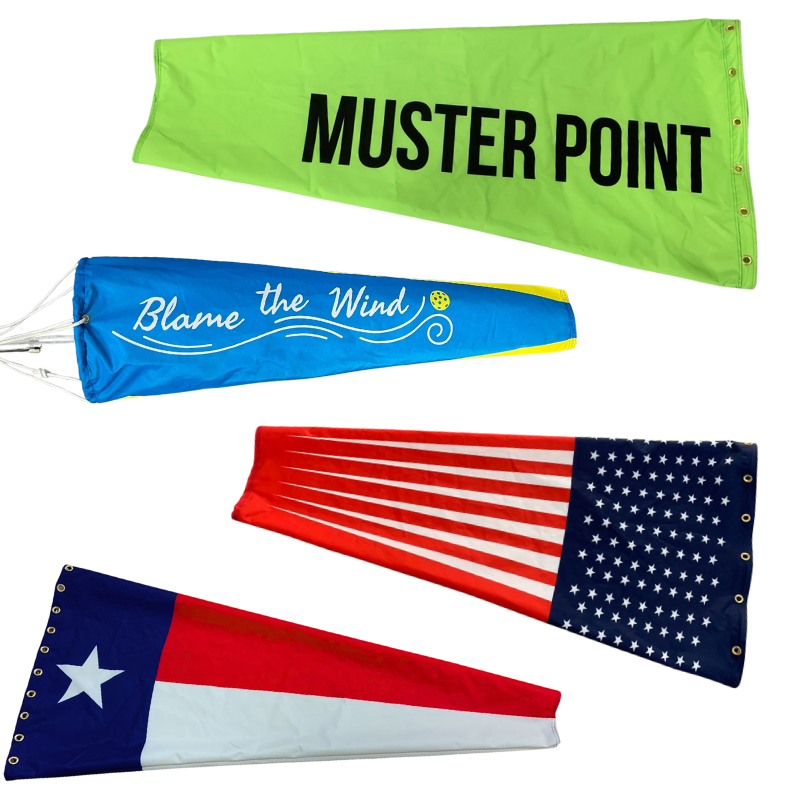
For projects that require conformity with FAA AC 150/5345-27F, confirm the exact assembly and fabric requirements before ordering. The specification defines 18-inch-by-8-foot and 36-inch-by-12-foot sizes, requires water-repellent fabric, and does not allow lettering or logos on the windsock.[2]
Frame or Assembly Service Decision
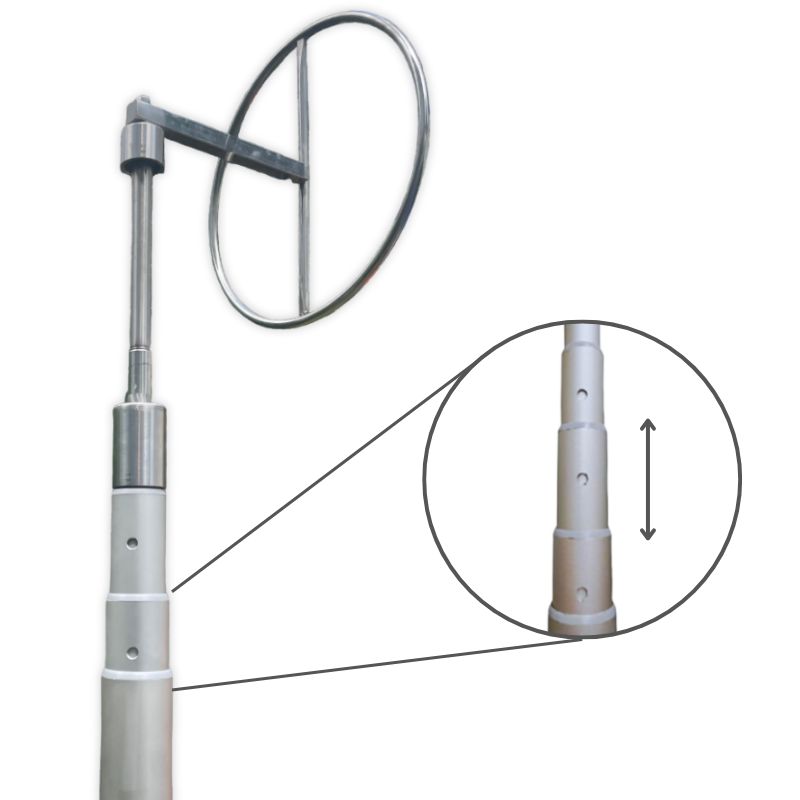
FAA specifications call for a frame that holds the throat open, deters water accumulation and allows the windsock to move freely about its vertical shaft.[2]
Remove the assembly from normal service and investigate when:
-
☐ The frame binds or cannot rotate freely after approved cleaning and lubrication.
-
☐ Bearings, bushings or the vertical shaft show damage or excessive play.
-
☐ The throat frame is bent, distorted or no longer holds the opening fully open.
-
☐ Corrosion or cracking affects structural integrity.
-
☐ The support, base, hinge or fasteners are loose or damaged.
-
☐ Lighting or wiring defects cannot be corrected through the approved maintenance procedure.
-
☐ The wind cone is no longer readily visible from its intended operating area.[3]
The FAA specification includes formal movement and extension performance criteria. Do not treat an informal field observation as a certification test. Use the manufacturer's procedure or qualified airport personnel when performance testing is required.[2]
After Severe Weather, Impact or Maintenance Work
Complete an additional inspection after:
- a suspected vehicle, mower, snow-removal or aircraft strike;
- a severe wind event that may have damaged the fabric or support;
- work on the frame, support, bearing, lighting or foundation;
- a pilot or operations report of unreliable wind indication.
Record the observed condition, corrective action, parts replaced and return-to-service authorization under the airport's maintenance process.
Siting and Visibility Check
FAA installation guidance says the primary wind cone should be readily visible to pilots. Supplemental wind cones near runway ends must provide an unobstructed view during landing or takeoff and must comply with runway safety, object-free and obstacle-free area requirements.[3]
-
☐ Primary wind cone is readily visible to pilots.
-
☐ Supplemental wind cone has an unobstructed view from the intended runway end.
-
☐ Vegetation, parked equipment, construction or new structures do not block the view.
-
☐ Any proposed relocation is reviewed against the airport's approved design and FAA coordination requirements.
Corrective Action Log
| Date |
Finding |
Immediate Action |
Parts or Work Required |
Owner |
Closed Date |
|
|
|
|
|
|
|
|
|
|
|
|
|
|
|
|
|
|
Match the Replacement Windsock and Frame
Before ordering, record the existing throat diameter, effective length, frame diameter, attachment method and operating requirement. Do not assume that a pole includes a frame or that every airport windsock is
FAA Compliant*.
FAA Sources
[1]
FAA AC 150/5340-26C — Maintenance of Airport Visual Aid Facilities
[2]
FAA AC 150/5345-27F — FAA Specification for Wind Cone Assemblies
[3]
FAA AC 150/5340-30J — Design and Installation Details for Airport Visual Aids
Revision: November 2026. Review against the airport’s approved maintenance program and the equipment manufacturer’s instructions.